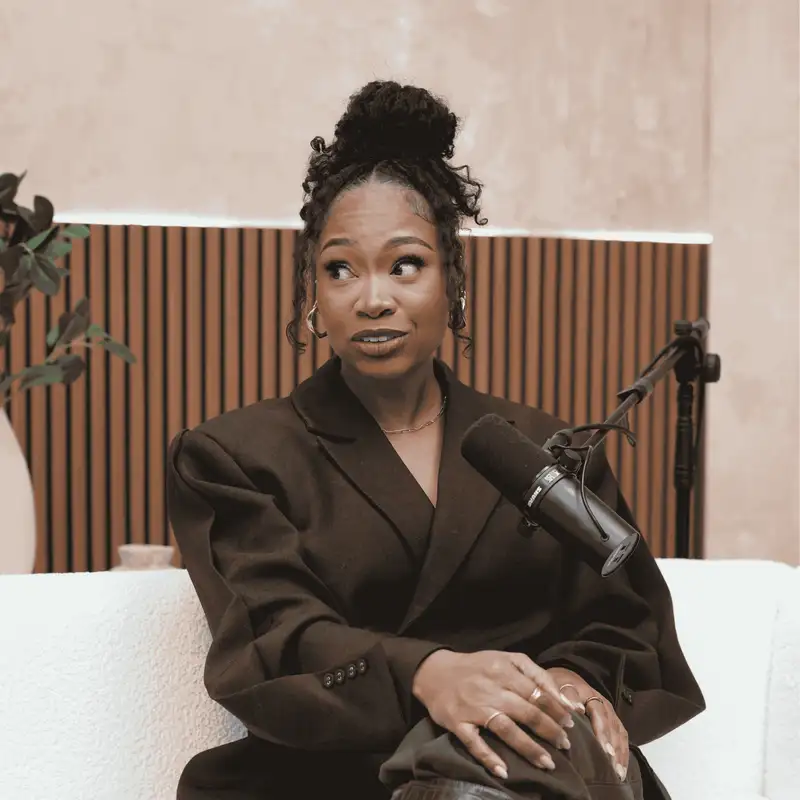
Jamelia Donaldson on Building a Business with Community at Its Core
Jonathan Jackson: Welcome
back to Due Dilly.
I'm one of your hosts, Jonathan.
Today on the podcast, we
have an incredible episode
with Jamelia Donaldson.
She's an entrepreneur, she's a founder.
She's built Europe's largest
product discovery box for
natural and textured hair.
If you care about building a business
that's centered on community supply chain,
executing your ideas, or you just want
to hear a British accent lull you into
the highest register of comfort you can.
You should watch this also, because
most of you aren't you should click
subscribe because it helps and because,
I mean, what else are you doing?
Great.
We'll see you in the episode.
Carl Joseph-Black : So, your history,
, at BlackRock was really interesting.
Jamelia Donaldson: Mm-hmm.
, Carl Joseph-Black : And I really
wanted to know, 'cause if I'm
correct, you were doing you were
doing compliance at , BlackRock.
Jamelia Donaldson: Yeah.
Carl Joseph-Black : And, the thing
that I was really trying to figure
out is you're shipping product
to so many different countries.
Jamelia Donaldson: Mm-hmm.
. Carl Joseph-Black : How did your
experience at BlackRock kind
of transfer into your ability
to navigate that environment?
Jamelia Donaldson: Wow,
such a good question.
, So my time at BlackRock was quite split,
so I was there for just under three
years, went across a few different teams,
portfolio compliance being one of them.
And I think that role in itself just
takes a high level of concentration
and a high level of diligence.
And so for me it was just
understanding like how critical some
decisions can be and how quickly
you need to make some decisions.
And I think it was actually really.
They're two completely
different environments.
'cause at BlackRock, like the
rules are there, it's up to you to
code the rules to block the trade,
make sure it doesn't go through.
Mm-hmm.
Whereas hair care is very unregulated
and it's like literally the completely
opposite end of the spectrum.
And I also didn't have a blueprint
because I was entering this industry
for the first time, not knowing anyone.
So I actually didn't apply any rules
because there weren't really any
rules to apply until it was too late.
So.
A very funny story, but very traumatic
at the time, was that during lockdown
we had like a massive surge in interest
because everyone was like, all of the
hair shops are shut, these supermarkets
are open, but supermarkets aren't
selling products for black women.
So if you're a black woman in
need of hair products, the only
option was treasure trusts.
So everyone was talking about it,
we're black-owned, everyone was
like really, really hype about it.
And then we were like, great, like
how can we keep up with demand, like
reaching out to more brands over here?
And it was going really, really well
until everyone stopped manufacturing
hair care and they froze and started
manufacturing hand sanitizer.
And we were like, right, obviously
we can't fill our boxes with hand
sanitizer, so what are we gonna do?
Eventually we were like able to
contact enough d different brands
and then land on a brand that was
like, look, we can ship over and we
can get the products over in time.
So got the products over in time and
then they were actually being sent
through an existing UK distributor.
Speaker 5: Mm-hmm.
Jamelia Donaldson: And so they came, they
dropped the products to the warehouse,
and then we had packed like the first
a thousand boxes, and this was like
a couple of days before Christmas.
So we're up against the crunch, the
crunch D, and once we had packed the
first a thousand, then we get a knock.
I went to have a meeting with one of
my employees at a coffee shop, and
then someone called me and said like,
oh, Jamia trading standards are here.
Can you come to the warehouse?
And I was like, who?
I know what trading standards
is, but I was like, why the heck
would they be at the warehouse?
They came and then they said, oh.
Some of these products can't go out.
They're not UK compliant.
They've only got us labels, and at that
point, the penny drops like, oh, okay.
So there is regulation in this industry.
It's not widely spread and
not everyone applies it.
So the interesting thing is that
the products were delivered to us
by an existing distributor who has
like a warehouse that's like 10, 20,
30 times bigger than our warehouse.
Stocking American products, but
they've never come under scrutiny.
But as a black-owned brand that has come
and has been very disruptive, someone's
almost like blown the whistle and
has been like, oh, actually go there.
Speaker 4: Yeah.
Jamelia Donaldson: So I have my own
thoughts about who blew the whistle, but
I say all of that to say that I think
I did underestimate the co compliancy
and the rules that needed to be followed
because it is highly unregulated.
Mm-hmm.
And there's a lot of conversation at
the moment about duplicate products,
especially on the likes of Amazon,
because no one is irregulation it.
Jonathan Jackson: Right.
Jamelia Donaldson: And I think that
it's really difficult to separate
race from that because when products
are mainstream and everyone's using
it, they're very highly scrutinized.
Whereas when it's for black women,
it's kind of like a free for all.
Carl Joseph-Black : Hmm.
Jamelia Donaldson: Yeah.
Carl Joseph-Black : Okay.
I find that interesting just 'cause
as, as you start to learn about the beauty
space, you start to realize like, oh wow.
Like not only.
Are there more rags than you thought?
But also on top of that, like you
start to really think about like
who's enforcing what exactly?
How are they enforcing it?
Is it strict?
Is it not?
What are the penalties?
Speaker 5: Mm-hmm.
Carl Joseph-Black : And like
you mentioned, they said you
couldn't ship product at all.
Yeah.
Because they had us labels and
there were certain products in
them that were in compliant.
Do you find that you have that
issue with other countries as well?
Are they as strict as the uk and is
there a high level of enforcement,
or do you find that at least once
you get it over to the uk that
the standards are pretty flat?
Jamelia Donaldson: Yeah, so the, for me
and for my team, the standard is the uk.
Like, if it can't be sold in the
uk, then we, we won't ship it.
Mm-hmm.
Because we, the UK and the EU
have the tightest standards.
Mm-hmm.
And yeah, the most regulation as
far as ingredients are required.
So if there's at least
1% of an ingredient.
In a formulation, it needs
to be declared on the label.
And that's not the case
in other countries.
Mm-hmm.
So like if we, if we abide
by UK compliancy, then we're
good for all of the countries.
Like the continent doesn't
have that kind of regulation.
Caribbean definitely doesn't.
Mm-hmm.
And the US you guys
are a lot more liberal.
So for us, the UK is the standard.
And so if we meet UK
Standard, then we're good.
Carl Joseph-Black : Oh, that's cool.
Jonathan Jackson: One of the things
that I found fascinating in a previous
interview you did was talking about
how you went accidentally global
when you first started Treasure Tres.
You said one of your first orders
of some, some South Africa.
Jamelia Donaldson: Yeah.
Jonathan Jackson: And you didn't realize
you had turned global shipping on.
And so you got to the post
and you realized that like the
cost of shipping was just gonna
clip your margins completely.
Jamelia Donaldson: Mm-hmm.
Jonathan Jackson: I'm curious when you
realized that one of your first orders
was international, was that bigger
validation for the idea, or were you like.
How am I gonna solve this and
what is this gonna mean for like
the thing I was trying to do here
that might be valuable out there?
Jamelia Donaldson: Yeah, that for me was
just really good validation because I was
at BlackRock, I was working in portfolio
compliance, which was 7:00 AM to 7:00 PM.
Mm-hmm.
So I knew that I'm doing these
12 hour shifts in the office.
I'm coming home and running
this business, and equally.
In my mind, I'm thinking within the next
five months I need to make a decision.
Like am I gonna try this entrepreneurial
thing or am I gonna stick with corporate?
And so that for me was
almost like a good omen.
And I was like, okay, cool.
So this, this has scope and this can
go beyond just the uk, even though
the UK is what I was targeting.
And I wasn't necessarily
thinking about South Africa.
And I think now that I look back
whenever I speak with American brands
and the UK gets underestimated as
like a hub for consumers, I think the
missing piece is always that like.
The UK is a launchpad for the whole
continent of Africa and the Caribbean
because we have such close ties to like
relatives and lineage from those places.
So if you want a brand to pop
in Nigeria, launch in London.
Mm-hmm.
If you want your brand to bang
in Ghana, launch in London,
Jamaica, likewise Caribbean.
Mm Sorry.
Barba or Grenada.
There's a really strong presence in the
UK and it's very influe influential.
Mm-hmm.
So for me that was a nod to, okay,
there's scope to take this truly
global, but also there's really high
impact for brands that do want world
domination and we can provide a platform
and leverage for them to do that.
Jonathan Jackson: Yeah.
The, this is something that I think
I've seen people fumble, which is
presuming that a unique market has
the same standards as the US and
this is something that you've been
pretty vocal about in terms of the.
Black haircare consumer journey
and the distinct ways that plays
out in the UK versus the us.
Can you just like talk about the points
at which they diverge because I think
sometimes people think there's like
synergy and they don't actually know
how different the experience is that
you have with someone in the states.
Jamelia Donaldson: So different.
So pre TikTok, I used to say that
you can see an African American
woman and a black British woman,
and they would look the same.
There would be no major differences.
TikTok, there's like slight makeup trends.
So like if you're into makeup and
beauty, you can see like, oh, she's
clearly from the uk, she does her
makeup like this, she's from the us.
She does her makeup like this.
But beyond that, on face value,
the consumers, the consumer
profiles look identical.
In reality, they're completely different.
Earnings are very different in the uk.
Like generally speaking, African Americans
earn more than black British consumers.
Mm-hmm.
But then when we looked at salary
sacrifice, black British women
were sacrificing more of their
salary to maintain their beauty
versus African American women.
Carl Joseph-Black : Mm-hmm.
Jamelia Donaldson: So beauty plays
a much more significant role in the
DNA of black women in, in Britain
because although they're not earning
more, they're dedicating more
of their salary to their upkeep.
Speaker 5: Mm-hmm.
Jamelia Donaldson: And then when
we started to look at how consumers
were shopping, we saw that in the uk.
Like the ritual and the habit
of going to a supermarket to
buy haircare just doesn't exist.
Like, I even done a talk maybe two months
ago and I asked how many people go to
the supermarket to buy hair products.
And they started laughing
because it's just not a thing.
And so when we ran the data, it was
only 1% of black women went to the
supermarket to buy hair products.
Whereas in the US it was like 35% of
African American consumers went to
supermarkets to go and buy hair care.
So it's like we are not represented in
those spaces, so we don't shop there.
And even if, even though they are
starting to introduce products mm-hmm.
Natively, it's not somewhere that we shop
or we associate with beauty shopping.
So we just don't, we just don't buy there.
Jonathan Jackson: So thi
this one to 35% is nuts.
Speaker 5: Yeah.
Jamelia Donaldson: Right.
Jonathan Jackson: So, you're saying
that you, so you're more likely to
find the product you're looking for
in a more concentrated set of places.
Mm-hmm.
How do you think about your position in
the consumer journey then, if there's less
places you can find the thing you need?
Mm-hmm.
But there's a concentrated need.
Like where do you see Treasure
Trusts providing both the education?
And the discovery because like you're
serving two ends of the market.
Jamelia Donaldson: Yeah, exactly.
And then I think the third piece is
like, it's the education, it's the
discovery, but it's also the community.
Because when we think about the condensed
places where you can buy products for
black consumers, it's not owned by
black people, it's owned by Asian men.
And that experience, like that
consumer experience walking around
the shop, entering the shop, asking
for advice, there's historically and
generationally been a lot of friction.
Mm-hmm.
Because it was once owned by,
black Caribbeans came to the uk,
they set up, is that they're
actually a group called Dyken.
Dryden, a duo called Dyken Dryden.
They came to the uk set up a
black hair empire effectively,
and they continued to grow that.
And it's, they started to like
invest in other businesses.
They set up travel agents.
They became really
significant for the community.
They wanted to pass on
their legacy to their kids.
Their kids declined.
And so it got sold to Asians.
And so now the Asians in the black,
Asians in the hair care industry
in the UK run the whole show.
And so there is a lot of tension because
you're going into hair shops, you are
asking for advice, but obviously this
guy's got like silky straight hair.
He cannot advise you on
what you should be using.
And equally, the customer
service is appalling.
And so for us it was like.
As far as like self-esteem is
concerned for me as a black woman.
Jonathan Jackson: Mm-hmm.
Jamelia Donaldson: I want
to be treated with respect.
And when you consider how much money
black women spend on beauty, we
actually deserve an elite experience.
And so that poured into the pop-up
shops that we started doing because
we were like, okay, whenever there's
beauty events concerning black women,
with all due respect, it's always
like a pull up banner, a tablecloth
on a table and some products.
And I was like, but when you look at
makeup brands and the way that they show
up, they're taking over the entire shop.
They're painting walls, they're
building furniture, everything's custom.
And I was like, why would we not do that?
Like, why would we show up the way
that everyone has always showed up?
And why would we just not up the
ante and do something completely over
the top and just set a new standard?
And so we had our first popup shop
in Peckham in South London, and we
weren't really sure what to expect.
Mm-hmm.
But over the three days, about
2000 people came and we were like,
damn, we was not expecting this
and we didn't have space for this.
And so the next year we went
to sh, which is East London.
Then we went to London Bridge,
which is like a major station.
Then we went to Birmingham, which
is like another, the second city.
Jonathan Jackson: Mm-hmm.
Jamelia Donaldson: And we'd done
it in their main train station.
And then after that we
went to their main mall.
And again, every time people came
they were like, this is insane.
Like people were coming.
And the dwell time was extremely
long because they were like, I
just wanna be in this environment.
Like how, why has no one
done this for us before?
But also the gratitude for doing it.
And one of our customers, whenever we're
like doing another activation, she's
like, can you come back to Birmingham?
Because my daughter doesn't understand
why she's walking past where your shop
used to be and it's not there anymore.
Jonathan Jackson: Mm-hmm.
Jamelia Donaldson: And I'm like, wow.
Like.
Okay.
It was not only impactful for our
customers, but like generationally,
it is shifting the perspective of
what to expect when you're shopping.
And I also think that like the
subscription service and like getting
your products delivered to your home
has set a new standard because she
also says that like her daughter only
knows products coming to her house.
Her daughter does not know going out to
a shop and like trying to get attention,
trying to get advice on what to buy.
And yeah, having that
whole checkout process,
Carl Joseph-Black : what
continues to impress me is
the way you think about space.
Jamelia Donaldson: Mm-hmm.
Carl Joseph-Black : John and I were, you
know, while we were doing research for
your interview, we were talking about
the statement you had made
about black women in, in gyms.
Mm. And that the products in those gyms
don't necessarily support their needs.
Jamelia Donaldson: Correct.
Carl Joseph-Black : And as a person who
goes to the gym, I had never actually
thought about this space in that way.
So like, you literally
rewired my brain, right?
Mm-hmm.
What are some of the other spaces
that you're looking at that
you believe that there's like,
there's like a underrepresentation
for, for products that we need?
Jamelia Donaldson: Yeah, I think
there's so many spaces and.
How I used to consider like black and
mixed race consumers in the UK and
beyond is almost like an invisible
demographic because you are right.
Like I also didn't notice for
a while until I was like, hold
on a minute, why am I packing a
suitcase to go to the gym and sauna?
Like I don't wanna have to bring every
single beauty product when like white
girls are going in the shower using what
they need, coming out, using the hair
dryer and then going straight to work.
It's crazy.
And I've got a suitcase
because I've got a million deep
conditioners and leaving conditions.
So for me it's like, I think it speaks
to the fact that, especially in the
UK, it's in those moments that you are
reminded that, oh, you belong here, but.
Not so much.
Yeah.
Because you weren't considered when we
were choosing which conditioner to put
in the shower or there's not a diffuser
on the blow dryer because actually
people that come here have straight hair.
Mm-hmm.
And for me it's like, how many different
ways is society like telling us that
you belong here, but not so much.
And I think that runs through
from like gyms, hotels as well.
Again, when I'm going to a hotel,
I'm going for one night, but I'm
carrying a suitcase because I
need my beauty products with me.
Airports, I think now you're starting
to be able to get minis from like
curly hair brands and like more diverse
brands, but that took a really long time.
We're in 2026.
I think anywhere that requires you to
like shower or refresh needs to have
a better range of products available.
But I think as a people we are very
used to like, at least in the uk, like
just finding ways around things like
working around the problem as opposed
to like tackling the product head on.
Like, excuse me, why is there not
something here that I can use?
And I think what stood out the most
for us from that research was like,
how many women were avoiding working
out because of their hairstyle.
Like if I just got my hair pressed,
I'm definitely not going on the
CMR stuff for at least three days.
But equally, if I do choose to, when I
go to the changing room, I want an edge
control that's gonna help me do what I
need to do to get back into the world.
So I think it's just observing
the world and just noticing like,
what are the ways that we are
being told that we don't belong?
And then how do we troubleshoot
that so that that isn't the case for
like future generations that come.
Carl Joseph-Black : Mm-hmm.
That's real.
Jonathan Jackson: I'm, I'm we, we talked
about this off camera, but I've always
thought you've built a data business
that also supplies people with physical.
Things that meet their needs and this,
this, these trend reports you've been
doing are groundbreaking just functionally
in terms of hair intelligence to put
first party data against a massive
market and then focus that market on
what is deemed like illegible problems,
but are actually lived experiences.
How do you think about the impact
relative to the places you could affect?
Right?
So this, this last report comes out.
You've been pretty public around.
There were some phone calls,
there were some decks that didn't
have data, and then were like,
actually put the slide in slide 19.
Now look, there's a market, Dave, right?
Like that.
That's your work.
Like you're essentially building
a category while servicing a need.
Speaker 4: Mm.
Jonathan Jackson: How do you
think about that as part of
your business now in terms of.
You have these in real life
convenings that are elite.
You have these direct to
consumer relationships.
You have direct vendor relationships.
Mm-hmm.
And now you have a moat of
data that like you built.
Like how do you think about
this world that you're building?
Jamelia Donaldson: I think about it as
far as visibility, because again, I mean
we all would've heard it a million times.
Like what gets measured
gets managed, right?
And at face value, people look
at the uk black women only
represent 2% of the population.
So they look at that and they're
like, oh, doesn't matter.
But only through data could I get people
to listen, and only through data could I
get people to actually pay attention to
not, not only what I was building, but
also what consumer needs really were.
And I think we're in a really unique
place in the UK because although the
black population is so small in areas
like London, it's highly concentrated
and the mixed race population is the
fastest growing population in the uk.
So pretty much the UK is
gonna be a mixed race country.
Very soon a lot of people are gonna
be upset, but it is gonna be the case.
So I see it as like, it's just not
something that can be ignored and.
I know it can't be ignored because I was
being ignored because we didn't have the
data and it's not until we had the data
that we could have better conversations
and prove the existence of us and prove
our needs and provide a business case.
Because essentially for
brands, it's business and it's
actually not that personal.
Whereas for us, it's
business and it's personal,
Jonathan Jackson: this execute
friends, you could just execute.
I think that one of the compelling
ideas that you over the past decade
have continually express is just this
relentlessness about the problem.
Like there's an obsession you have
and you're open about like, this
is a problem that needs solving.
Whether or not you validate it, I'm
gonna dedicate a significant portion
of my life to solving this problem.
Speaker 4: Mm-hmm.
Jonathan Jackson: You just hit 10 years.
Speaker 4: Mm-hmm.
It's
Jonathan Jackson: incredible.
How do you, what is your mindset?
Like, how do you think about the
problem you're solving and what
you need to do next to continue to
attack that problem, given all of
the things you've actually made?
Right.
Jamelia Donaldson: Yeah.
The way that I think about it, , I
would say the one liner that's
always been top of mind for me
is like normalizing natural hair.
Like, it shouldn't seem abnormal that
women want options for their hair.
And normalizing natural hair doesn't
mean that you don't wanna experiment
with a straightener every now and then.
Maybe you wanna relax and then you
want a big chop and you wanna return.
But I feel like there should be like a
level of liberation and option for black
women that there just simply isn't.
And so I just continued to look at
the world and I don't know what it is.
My lens is just very black.
Like my, my mom even said that in nursery.
My teacher pulled her aside and
was like, Jamia is really like,
she always talks about race.
And I was like three.
And my mom was like, well,
I dunno what to tell you.
Like at my home, it's the black home.
And we are very proud
of where we come from.
And so my lens of the world has
always been like, Hmm, that's cool,
but like, why is it not black?
Or like, that's cool, but
why don't we have that?
Or That's cool, but we
are missing from that.
And so when I'm looking for things and
like what's keeping me driven is like
how can we continue to be ignored when
we are so prevalent and so influential?
And so it's like, I wanna see
credit given where credit's due.
And I also want us to feel a sense of
home that we provide for so many people.
Jonathan Jackson: Mm.
Can we talk about curly Christmas?
Jamelia Donaldson: We can.
Jonathan Jackson: Okay.
So I, I would like you to frame up.
What Curly Christmas is and then
how crazy you went with an Advent
calendar, the size of a small child.
Jamelia Donaldson: Yes.
So Curly Christmas is a
once a year activation.
It's gonna happen annually around
Christmas time and essentially
it is Christmas but black.
So we say that not in Hill
Carnival takes place in August.
Curly Christmas takes
place November, December.
Dependent on the calendar.
And ultimately it's like a beautiful,
like just coming together of people.
Black owned businesses, consumers,
hair and beauty, enthusiasts,
panels, media brunches.
It.
It really is a moment.
And last year was our first time
trialing it 'cause we were like.
Christmas is cool.
Finding a black center
in the UK is tough work.
It's not really an experience
that's widely offered.
And we had already started doing the
advent calendars the year before, so we
were like, there was a real reaction to
black consumers having an advent calendar
that they could actually use because.
All of the major retailers
were doing these amazing beauty
calendars, but when you open that
lipstick, that's not working.
When you open that blush, that
is absolutely not working.
That shampoo is not
washing half of your hair.
And so we were like, we need
something that actually is tangible
and useful for our consumer.
So we'd done that first and it was
ranked really highly, like Vogue
picked it up, Marie Claire picked it
up, Cosmo picked it up, and there was
a real buzz around like, oh wow, why
has no one considered this before?
And again, that speaks to that thing of
like looking at the world and thinking,
hold on, but we are missing from that.
And so we were like, Hmm, what
if we like took this up a notch?
We do pop up shops every year for our
brand anniversaries, and we were like,
let's make Curly Christmas an in real life
experience where people come and celebrate
Christmas, but it's a family friendly day.
So we had the press day, consumer
day, and then family day so that
the kids could come as well.
And it was a time we
had food trucks outside.
We worked with Black East London and
we had a few different black vendors.
We had black Santa,
which Wingstop sponsored.
And then we had like pretty much all
of the beauty brands that are present
all coming into the UK through various
different activations from like braid
bars, like skincare, scalp scans.
But ultimately it was just a really
unique experience where people came
into the space and they were like,
from the minute I stepped into this,
I felt like it was a wonderland.
So there was like red draping everywhere.
There was like Santa growing over there.
Then there was the in real life
shopping experience, and there was
the main stage with the panels.
And for us it was like, how do
we remind consumers that like
Christmas also looks like us?
Mm-hmm.
And these moments are for us as well.
And for us it's really in the detail.
Like when you came through the door.
We usually do hot chocolate, but
we was like, you know what, let's
do Dal Getty Teas and Dal Getty
is a, I think it's Granadian.
Mm-hmm.
Granadian guy mark Dal Getty.
And we're like, let's serve
his teas, because when it's
Christmas, you're drinking sorrow.
So let's have some sor tea.
When we, the door, we're
having lemon and ginger tea.
And we're like, how do we just remind
our consumer that like, we see you
and we are you, so we are creating
this experience with you top of mind
Jonathan Jackson: that's different.
And you also had.
I think it's your second year
doing a national ad. Yeah.
Am I correct?
You had channel, you had
a whole 30, 32nd spot.
Jamelia Donaldson: Yeah.
Jonathan Jackson: On Channel four.
Jamelia Donaldson: Channel four,
yeah.
Jonathan Jackson: National.
Jamelia Donaldson: Yeah.
Jonathan Jackson: For the second time.
Jamelia Donaldson: For
the second time, yeah.
So it was
Jonathan Jackson: stop playing around.
Jamelia Donaldson: It was
like a three part activation.
So first we went live with the
advert and then we went live
with the ADV admin calendar.
And then there was the event itself.
And the adverts always
surprised me because again,
they're shown within the uk.
We had some really cool slots.
Like there's a show called Goggle Box.
I dunno if you guys have heard of it.
Carl Joseph-Black : No, no.
Jamelia Donaldson: It's
a really unique concept.
It's basically like you are
watching people watch tv.
Okay.
But it's interesting because
you're in people's homes.
So there's like a Jamaican family,
an Asian family, a like white
British family, a gay couple.
Like, it's honestly just so
interesting to see how people
live and see how they react to tv.
Mm. But that is like a really
highly grossing, highly grossing I.
So we were, we had a slot in that,
which was really influential.
I think in total we hit
about 12 million households.
But beyond that, we got messages
from women in Sweden to say like,
Hey, my daughter's mixed race.
There's no one black in our neighborhood.
But she saw the ad and she loved it.
Carl Joseph-Black : Mm.
Jamelia Donaldson: And for
us, we're like, oh, wow.
Like, impact is really important for me.
And that is just a testament to like, you
never know who's watching and you never
know the impact it's gonna have on the
way that they see themselves in the world.
Carl Joseph-Black : That's powerful.
That's really powerful.
You think so creatively, so I
wanna know like what continues
to like, in inspire you?
Like what are some things that
you're, like, if I hear that it's
out or if I hear something like, a
project is completed by X person.
Hmm.
Like, what makes you say,
oh, I gotta tap into that.
I gotta see what's up with that.
Jamelia Donaldson: I can't
say that it's people.
I think it's places.
Carl Joseph-Black : Places.
Jamelia Donaldson: So travel
for me is like the ammunition.
Mm. It's like, how can I go
and observe something and
think, oh, we don't have that.
Or, oh, that's a really
interesting way to do it.
So like, even the food place that we
were talking about whereby you can
walk into one establishment, eat from
eight different restaurants, but really
it's just one I'm thinking like, oh,
what does that look like in beauty?
Like, how do we borrow that concept?
And I like the, I like
the fashion industry a lot.
Carl Joseph-Black : Mm-hmm.
Jamelia Donaldson: And I like
the way that they execute.
Carl Joseph-Black : Mm-hmm.
Jamelia Donaldson: And so it's like,
okay, they've done that in fashion.
Let's do that in black hair.
Because we see a, like a lot of industries
do borrow from each other, but again,
black consumers are often left out.
It's like, how do I borrow from different
industries and remix it to make it work?
And equally, how can I observe different
cultures and be like, oh, okay, cool.
They do that in that country.
Let's try this in this country.
So I think for me it's travel.
I love creatives.
Yeah, I would say that I love creatives
and I'm a lot more inspired by
creatives than I am entrepreneurs.
Mm. Creatives and artists, I'd say.
Yeah.
Jonathan Jackson: The, you
mentioned a while ago that, like
growing up in Edmonton mm-hmm.
Like you had cousins, the street over,
Jamelia Donaldson: you done deep research.
That's
Jonathan Jackson: what we do.
And so I, I've, I'm curious if you think
about like that social fabric Yeah.
Of like your neighborhood and your
family, and do you think about that
in product delivery as well as in
sort of your in real life experiences?
When I think about unboxing
as a moment mm-hmm.
And you think about, you know.
The consumer, whether it be the mom
and the daughter or someone that
just took a job in Dubai that like
doesn't have sort of the connectivity.
How do you think, like how you
grew up connects to how you
think about the box itself?
Jamelia Donaldson: Mm-hmm.
Yeah, it actually influences it a lot
because initially when we were designing
the boxes, we just had the branding on
the outside and then we realized that like
one, when people are open it on social
media, you're not seeing any branding, but
equally when you're at someone's house.
Carl Joseph-Black : Mm-hmm.
Jamelia Donaldson: And the boxes just
open when missing out on an opportunity
to communicate with them as well.
So we definitely know for sure
that when people are buying,
they're not buying for themselves,
they're buying for their household.
And women are the consumers that do that.
Jonathan Jackson: So we hear a
lot from men like, oh, why don't
you do anything for the man?
And it's like, we can do it for you,
but you won't buy it for yourself.
Or women's gonna buy it
and you are gonna use it.
So let's continue to speak
to the women because she.
Jamelia Donaldson: Runs the household ways
and like beauty decisions belong to her.
Mm-hmm.
Time.
And so yeah, we think about how are we
communicating with the audience that
knows us, an audience that doesn't.
So when your cousin comes around
to your house and on your dressing
table, there's a box of brown on
the outside, but pink on the inside.
Speaker 5: Mm-hmm.
Jamelia Donaldson: And she's
seen that somewhere on TikTok or
Instagram or hasn't, how can we
communicate to her who we are?
So in the, in the inside of the box, it
says, cancel your plans this wash day.
And then there's product's there.
So as a consumer or as an as a
stranger, you're like, oh, hold on.
What's that?
And then you can discover it that
way and dive into it that way.
Jonathan Jackson: That is the
most concise end-to-end consumer
journey I've ever heard in my life.
That someone can get a box or recognize
color sensitivity experience and then.
Immediately order it, have that same
lived experience in in their house.
Jamelia Donaldson: Mm-hmm.
Jonathan Jackson: And then
someone else essentially is doing
the word of mouth advertising.
Jamelia Donaldson: Yeah.
Jonathan Jackson: It started as
the visual advertising on social.
Jamelia Donaldson: Yeah.
And something that we noticed
a lot was that the parcels
were getting lost in transit.
So it was like the, we were
using, we still use Royal Mel.
Royal Mel, I think.
In certain areas, the people knew
what Treasure Trust was, so the
stuff was disappearing and we were
like, do you know what, there's
only, there's only so much we can do.
So we'll just continue
to resend the package in.
But we're like, clearly people
that know what's inside the
box, know what's inside the box.
But if you don't know that
inside it says Sis counts.
Your plans is wash day from
the outside, you don't actually
know what we're delivering.
And so we also added to the outside
of the box wash day delivered.
So the postman, maybe it's getting
left on your step and someone in the
apartment next to you is walking by, but
they can also see like, oh, what's that?
Oh, wash day delivered.
If you're a Curry girl, if you're
in that ecosystem, you're like,
okay, that's language I recognize.
I'm gonna also use that.
So I realized quite early on that
we were missing out on a lot of
advertising opportunities because
at one point we only had branding
on the outside, not on the inside.
At another time, we put them in
like really mysterious boxes so
they would stop going missing.
But then we realized if you
know the brands, you know that.
What's inside.
So let's just make the most of it.
And let's also advertise on
the outside of the box, not
just on the inside of the box.
Jonathan Jackson: That's incredible.
We, we, we mentioned men for a
second, so I wanna spin the block.
You also did a popup last year mm-hmm.
For men who can't braid.
Jamelia Donaldson: Yes.
Jonathan Jackson: Which is just as
far as names go, impossible to forget.
And it went really, really well.
And I, I'm very interested in how
you conceptualize something like that
to serve an audience that people are
either like, you'll be fine, shut up,
or like, they don't actually care.
Leave them alone.
Mm-hmm.
And you found like this third
way without getting outside of
yourself as a, as a, as a brand.
Can you talk about that?
Jamelia Donaldson: Yeah, for sure.
So we'd done a few like digital
campaigns for Father's Day in the past,
and it had been, we had done for black
girls who Can't Braid for a while.
And that went off because it was
like girls who of all ages, everyone
expects you as a black woman to
know how to braid, maybe you don't.
And it got, it was just the
idea that was like getting
thrown around between the team.
And then this last Father's Day arrived
and we were like, do you know what for
this Friday's day, let's try for dads
who can't braid, see what happens.
And we pitched it to a few brands.
Palmers was the first brand
that we pitched it to.
They said yes immediately.
And we were like, okay, cool, let's do it.
So we had a salon in Mayfair and we
invited, I think it was like 25 dads down.
We got some mannequin heads.
And then we had them take like
learn how to braid effectively.
But I think for me, a comment
that I always get from people,
it's like, Jimmy know 10 years
in why you still go into events?
Like why don't you just
let your team run it?
Which I can do, but.
I learn a lot by just watching
how people are interacting and how
they're engaging with the concept.
And so we saw that, oh, okay.
People wanna bring their
actual child to the workshop.
Like we should have an option
where they can bring their child
or they can work on a mannequin.
Oh, okay.
Like the dads also wanna
walk away with products.
Let's introduce goody bags so that
they're able to walk away with product.
And so I like to be present so I
can observe like what's working,
what's not working, where's
friction, what could be easier?
And how do we just really
refine what the offering is?
So we ran it once and then it ended up.
Like we repeated it like three
times last year because people
just kept asking for it.
And in the comment section there
were men that were like, Hey, I'm
not a dad yet, but when I am I wanna
attend or I wanna learn how to braid
now so that when I am a dad I can
take care of my daughter's hair.
And there were also women in the comment
section saying that when they fell ill,
their husband wanted to take care of
their child's hair, but they couldn't.
And for us it was like, wow, this is,
like, this is reminding us that the
black family structure does actually
exist despite what the media tells us.
And I think for so many people,
the imagery of like black men
engaging with like beauty or like
feminine care was really like, it
was just a massive juxtaposition.
Right?
Yeah.
Like you're not used to seeing
like really muscular black
men playing with mannequins.
Mm-hmm.
Mannequin heads.
Mm-hmm.
Very strange.
So.
That was a big deal.
And so we were like, okay, how
do we continue to refine this?
And then we spoke with Rafael Sofa,
Luke, who's a really good friend of
mine who owns UK Black Business Show.
And he was like, yeah, I've prepared
some affirmations for the men.
And I was like, okay, cool.
Let's go.
Wow.
So at the beginning of the workshop,
they put their hand on their heart
and they say their affirmations
and it's, it's really funny.
Like they're not that serious.
It's like, I'm not afraid of the comb,
things like that.
But it like, it like lightens the mood.
But it also, I think
it just connects them.
And we thought that it was just women
that like linger after events, like after
events, we cannot get people out of the
venue and we're like, guys, we cannot
continue to pay for the extra time.
But for the men, they were like really
sticking around to get to know each other.
And then we brought on Wingstop
as a sponsor to do food and then.
They were staying around even longer,
and we were like, wow, this has
become like a really safe space for
men to just connect with each other.
Mm-hmm.
Beyond learning how to take care of
their child's hair and being a more
active parent in like, the care of
your child, because doing hair is
actually caring for your child as well.
Carl Joseph-Black : Mm-hmm.
It's very bold that you
kind of took that risk.
Right.
Because, you know, traditionally the
idea of men connecting around here
usually is in the barbershop, right?
Jamelia Donaldson: Yes.
Carl Joseph-Black : So for a woman and
a brand that typically caters to women
to kind of say, Hey, I'm, I want to
kind of test to see if I can get them
to get together in a different space.
Jamelia Donaldson: Mm-hmm.
Carl Joseph-Black : Right?
Is is a risk in itself and it's just
beautiful how it like really panned out.
Jamelia Donaldson: Yeah.
It, it was, it was really heartwarming.
But as you said, as a woman.
I think, well, all of my team's women.
Mm-hmm.
So as women, we were like, we have to fall
back like this isn't, we were not leading
the classes, it was men who knew how
to braid that were leading the classes.
Mm-hmm.
We had a male host.
Like it was a very masculine
environment, even though it was
like aesthetically pleasing.
Carl Joseph-Black : Mm-hmm.
Jamelia Donaldson: And for us,
it was important that we knew
the role that we were playing.
Like occasionally we step into
support and like tell you like,
no, that's not how you part.
And like, yeah, put this piece in the
middle and then put this one over.
But beyond that, we wanted it to feel
like a masculine environment where
they felt like this was curated with
them in mind as opposed to like, oh,
let's, let's do something for the men.
Yeah.
It's like, no, like, let the men do this
for themselves because this is normal.
Like, it is normal that black
men take care of their kids.
Mm-hmm.
And this is what it actually looks like.
And interestingly, it was like
black men, white men, Italian men,
Indian men who had mixed race kids.
Mm-hmm.
And they were like, this is my child.
Like I want to care for my child.
Jonathan Jackson: Mm-hmm.
There's this, there's this kind of
through line I find that you have around.
People exercising their agency.
Jamelia Donaldson: Mm-hmm.
Jonathan Jackson: Through
care for themselves.
And I think there's some, there's like
a, oftentimes a state shift when you
start taking care of your hair, that
like affects the rest of your person
Jamelia Donaldson: a hundred percent.
Jonathan Jackson: Because you can't grow
a plant presumably and like leave it
to chance in the same way you couldn't
leave your body to chance or relationship
to chance or your career to chance.
Have you, given you've spent so long on
this problem, are you starting to see
ripples of the treasure trusts ethos?
And when I say ethos, this idea that
like, we belong here, we deserve
elite experiences and anywhere
we set our feet, we have value.
Are you seeing this sort of in
the entrepreneurial ecosystem?
In the UK more than you did 10 years ago?
Jamelia Donaldson: Yeah, yeah, for sure.
I think that the expectations of
consumers have definitely climbed
up because as I said before, it was
like, pull up banner table tablecloth.
Whereas now the expectation is that
there are pop-up shops and they are
actual retail moments and experiential,
not just like transactional.
So I've definitely seen
the elevation of that.
I've also seen a lot more respect being
given to smaller creators, in particular
natural hair creators because they weren't
typically invited into the beauty spaces.
I think they were definitely
undervalued by brands, and now I
think they're getting a lot more
respect and they're being invited
into spaces that they deserve to be.
And I think.
The way that we have continued to
work with micro nano influencers
has really influenced the bigger
brands because now they're doing
it and they're finding more unique
ways to involve them in experiences.
Whereas before it was like,
no, if you're not over 250 k,
a hundred K, we don't wanna
Speaker 4: know.
Mm-hmm.
Jamelia Donaldson: Whereas, like
continually, we've proved that actually,
no, these are the creatives that you
wanna pay attention to, and you wanna
build an enduring relationship with them
because they're gonna create what's next.
Like, they are actually the trendsetters.
Jonathan Jackson: How, how, how
does someone make it in a box?
Like if I'm watching this
and I'm like, I'm nice.
I'm like, I'm, I'm, I see what's going on.
I see the girlies need what I have.
What is, how do you, to the extent you can
share, how do you certify someone because
that, that's what we're talking about.
Because you've ha you have so much,
you move at the speed of trust.
Speaker 4: Mm.
Jonathan Jackson: When someone shows up in
a box, that actually means something now.
Like you can't just
Jamelia Donaldson: Yeah.
Jonathan Jackson: Come off
the street and get into.
Jamelia Donaldson: Yeah.
For us it's like firsthand experience.
So there's enough of us on the
team with different hair textures
to say, okay, let's try this.
If it didn't work for
you, you try it as well.
Let me know what you think.
And I think what's beautiful
about the way that brands are
manufacturing products, and I don't
think that this was always the case.
I think that sea moisture was
definitely the turning point for
this, where they started releasing
new ranges like every single week.
Like there was a different
drop, like every month.
And now we're seeing
all of the brands do it.
So there's always like a new
range that's like ingredient led.
So maybe it's coconut, coconut water, then
it's rosemary oil, then it's rice water.
And we're seeing the same thing.
So it's like once we've tried the
products ourself and we know that
okay, this is a reputable brand,
we trust what they're formulating.
Then when they approach us with another
new release, the process is a lot faster.
But initially it's like, guys, try
this and let me know what you think.
Like, do you like it?
Do you think our subscribers will like it?
Okay, cool.
Let's, let's feature it.
Mm-hmm.
Jonathan Jackson: You're also, I think.
Unlike many visible founders in the sense
that you have a particular way that you
curate how you show up intentionally.
Speaker 4: Mm-hmm.
Jonathan Jackson: In a way that
sort of works for your personality.
Speaker 4: Mm-hmm.
Jonathan Jackson: That
doesn't like dysregulate.
You, I've always found, like
sometimes when you're in a, in a,
in a, in a industry where visibility
has real implications for revenue.
Jamelia Donaldson: Mm.
Jonathan Jackson: You can't
not show up, but then there's
also like who you actually are.
Jamelia Donaldson: Yeah.
Jonathan Jackson: And I think you
have, can you talk about how you
think about your public persona and
your responsibility to that, but
also your thoughtful curation of
what you share and how you share.
Jamelia Donaldson: Thank you for that.
But I, I don't know how intentional
it is, if I'm being completely honest.
I think that one thing that I care
a lot about is like substance, which
is why I've told John time and time
again that this podcast is so sick.
The newsletters are so sick because
like, this is intelligent conversation.
Like this is stuff that I
actually care about and not
enough people are speaking about.
Popular culture obviously, like runs a
show and has its place in society, but
like, this is a really necessary space.
So I am, maybe it's like, it
might be a generational thing.
So my mom's a teacher, my grandma
was a teacher, and so education's
always been top of mind for me.
And so when I show up,
I'm like, can I teach?
Like, if I can teach something
here, then I'll show up.
Otherwise, like I, I'm just,
no, I don't wanna do it.
Like, I don't wanna just be there
for the sake of being there.
I dunno if it works in my favor or
not, but like, I'm also not the.
It's just not my character to like
pursue people in order to reach an
opportunity like that just just isn't me.
And I'm like, again, this
is a long game for me.
So I can't do things that are
gonna disrupt me or do short term
gain at the compromise of like
what it's gonna do longer term.
And so the only thing that I can do is
like authentically show up as myself,
stretch myself, put myself in positions
that like are uncomfortable so I can grow.
But ultimately I'm like,
this is a unique experience.
There's not many, there's a lot more
now, but at the time there weren't many
young black female founders in the uk.
And I'm like, this is,
this is a new thing for me.
This is like my first real business.
So if I can share my experience, great.
And if it can be of value, great.
But I find it really hard just to
like do stuff just for the sake of it.
Jonathan Jackson: I have.
One more question then I
have we have a gift for you?
Jamelia Donaldson: No way.
Jonathan Jackson: A hundred percent.
So.
Jamelia Donaldson: Oh, thanks.
Jonathan Jackson: Yeah.
So, so you spent a year in Atlanta
Jamelia Donaldson: Yes.
Jonathan Jackson: In your, in your
earlier life and you, you mentioned
how it was the first time you had ever
experienced metal detectors in school.
Jamelia Donaldson: Oh my gosh, yes.
Jonathan Jackson: I would love you to
talk about that experience because I think
it's very, very, very interesting to me.
Like your juxtaposition of going to
school at that age in your life and just
essentially getting the TSA pat down.
Carl Joseph-Black : Yeah.
Jamelia Donaldson: It was so.
We came over when I was in year
four, so that's grade five here.
And I've got an older brother
that's three years older than me.
And so my mom's a teacher,
so she had a teaching job.
She, I think we dropped my older brother
to school on the first day and my
mom just burst out crying because she
saw him walk through metal detectors
and she was like, what is going on?
Like, why would you ever need a
metal metal detector in a school?
Then she took me to my elementary school
and then like halfway through the day
she was like, I need to come and get
you because you are so much smaller than
all of the other children in that class.
That is like, it's making
me really concerned.
And then she said, okay, I'm
gonna bring you to my school
and you'll come to my school.
So she took me out of her school and by
small she means like I was literally like
so short and everyone else was so tall.
But I do think that that is, I
think it is reflected in the American
diet and the ingredients that are
allowed in America and that aren't
like the hormones in the food.
It was really visible then
because she was like, why?
Like young people look a lot older than
they actually are in America versus
in the uk and I think it is like, I
think it is a diet, a dietary thing.
So she was like, okay, I'm not
comfortable with you being in that school.
Like you look like a toddler
compared to everyone else.
Like, come out and come to my school.
Then I went to her school and then I
was in class and she, I went to her
office and she was like, what's wrong?
And I was like almost in tears.
And I was like, oh, I went to sit
down and this guy like pulled my
chair out and she was like, okay.
And I was like, yeah, why was
he trying to embarrass me?
I thought he was like
pulling out my chair so that.
It was a prank.
And I would fall on the floor
and she was like, no, Jamina.
He was just being a gentleman.
And I was like, oh,
we're suffering in the uk.
Okay.
Oh
Speaker 5: my God.
Suffering.
Jamelia Donaldson: Which,
Speaker 5: yo.
Jamelia Donaldson: So at that
point I was like, okay, there's
a lot of differences here.
Like, there's the metal detectors,
there's the fact that I am like a
toddler in comparison to everyone else.
Yeah.
And then like, I just
wasn't used to chivalry.
Yeah.
And I was like, why is he trying to
embarrass me in front of the whole class?
And she was like, no, he
is just being a gentleman.
So yeah, Atlanta was quite the
experience, but I love that place.
Jonathan Jackson: Oh man.
I did not know how that was gonna go.
That's incredible.
Jamelia Donaldson: Mm-hmm.
Jonathan Jackson: All right, cool.
So,
Carl Joseph-Black : so
let's, let's get the gifts
Jonathan Jackson: flowing.
Okay.
So,
as you know we take our, we take
our research very seriously and so.
In process for this.
I talked to several people in
the UK that know you very well.
Jamelia Donaldson: Oh my gosh,
don't, I'm actually such a crier
Jonathan Jackson: as a, as a result of
this we can get the tissues, don't worry.
We'll be all right.
As a result of this, I had
them answer three questions.
I asked them, what does
jamilia mean to you?
What has she done in the
industry and why is it important?
I formulated those responses
into an investment memo.
We worked on the summary me,
but if you could just start at
the yeah, right at the back here.
So if you could just read the top and
then the next three paragraphs I would
love, I would love if you could just
go direct your camera's right here.
If you could just read that for us.
Jamelia Donaldson: The top and
then the next three paragraph.
Jonathan Jackson: Yeah, the next three.
Yeah.
This, we have another copy
for you to take home as well.
But if you could just read, oh my gosh.
What this is what the people who
care about you in the UK said.
Jamelia Donaldson: Okay.
I feel like I'm a news anchor.
She's changed the black beauty game by
raising the standard of in real life
experiences, they're high level, high
quality and better and more intentional
than some of the larger brands.
She publishes data and trend reports
on the needs buying habits and spending
power in the black British beauty
space, which was basically non-existent.
Lots of the data use here was based
on the Black American experience.
By bridging the corporate acumen into the
founder landscape, she made an invisible
market legible to retailers and capital.
She did it at a time
when no one was doing it.
She's still doing it now.
Product innovation and community
building, she's helped to make being
natural and even relaxed or texturized
fun by introducing people to different
and new products every month.
The way she builds community is again.
Again, she was doing it at a time when no
one was doing it, and that is something
that a lot of people have been able
to see, emulate and create their own
versions of, but she was one of the first.
She was the first to do it.
She's candid in sharing her journey
as a beauty founder and businesswoman,
and always looking tea while doing it.
It serves as an inspiration
to many category positioning
and mainstream penetration.
She's broken through and managed to
position this side of the beauty space
to the more mainstream, showing that
we bring so much to the industry.
She genuinely cares about black women and
girls and has advocated for them in ways
seen and unseen for the last 10 years.
She's been in the game
for up to 12 years now.
She's constantly innovating, pushing
boundaries, and bringing a level
of creativity and ingenuity to
the game that is very admirable.
Founder profile and leadership.
Jamia is a cultural leader, cha
taste maker, and trendsetter.
To be honest, she's a visionary.
What she's built over the last
10 years hasn't just disrupted
the beauty in hair industry.
It's been a pillar of influence
for creators, business
owners, retailers, and more.
She means so much to people and beyond
personal opinion, the respect that is
held for her is so much more than she's,
than what she's built is who she is.
She moves with pure style and grace.
She's a good role model, good mentor,
good supporter, good encourager.
She's someone who's also
exposing people to businesses.
She's loving, kind,
generous, and is precious.
She's a wealth of
knowledge and experience.
She's someone who puts
others' needs before herself,
sometimes to her detriment.
She's also thinking, she's also just
thinking about people in that way, and
it's a powerful thing to have as a leader,
to have a leader who genuinely cares.
To see people grow, but also also pushes
you to be better, pushes you to do better.
Wow.
Jonathan Jackson: I think, I
think the mark of a person is what
people say about them when asked
by someone they don't really know.
And that's what people said about you.
Jamelia Donaldson: Wow.
That's really, really beautiful.
I was not expecting that.
Thank you so much.
Jonathan Jackson: People should know
why they matter and who they matter to.
Carl Joseph-Black : Word.
Jamelia Donaldson: Wow.
That's really, that's really kind.
Thank you guys.
Jonathan Jackson: You gave us your time.
You were gracious.
You're honest and we're grateful for you.
We appreciate you.
Thanks for being here.
Jamelia Donaldson: Thank
you guys for having me.
This is definitely the
highlight of my trip.