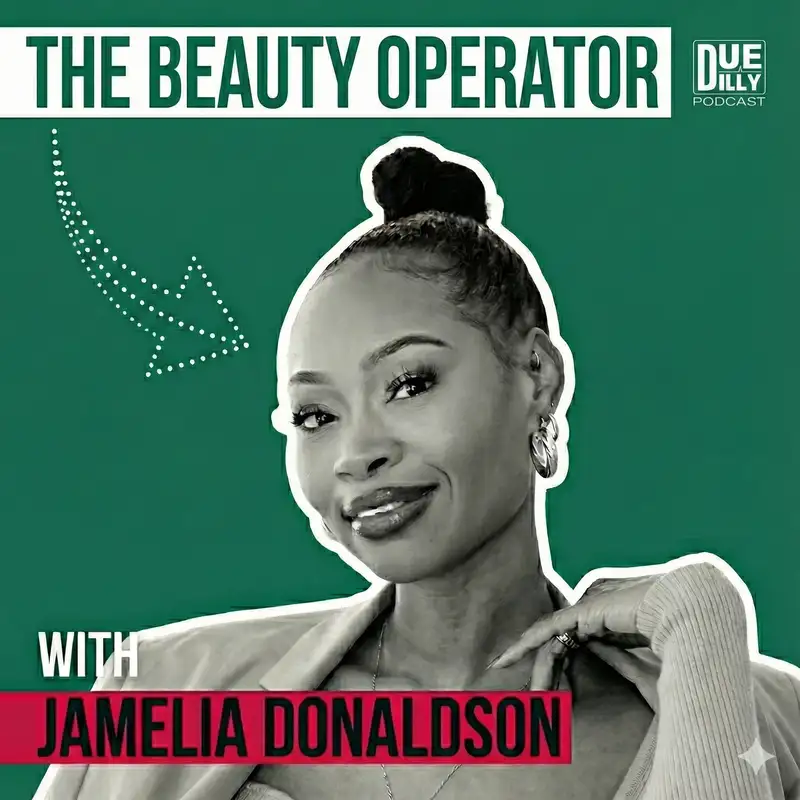
The 100% Open Rate Business Model: How Jamelia Donaldson Redefined An Industry
Jonathan Jackson (00:01)
Hey everybody. Welcome back to another edition of the Due Dilly podcast. I'm one of your hosts, Jonathan. And today I am here with a friend and entrepreneur and just an all around great human being. Jamilia Donaldson. She's the CEO and founder.
of Treasure Tress which I will let her explain. But if you are interested in hair, if you are building or like community-based businesses, if you're curious about the intersection of beauty, culture, data, if you have a supply chain that needs help, whatever, this episode's for you. Jamilia, how are you today?
Jamelia Donaldson (00:45)
I'm really good, but I'm even better speaking to you. I'm very excited for this conversation.
Jonathan Jackson (00:50)
Thank you so much. I grew up in a hair salon. of don't know that. I was on the hair salon. so I have more than I think the average person curiosity about the business of beauty, but particularly hair. And so I'd love for you to kind of give some context to.
Jamelia Donaldson (00:56)
Hmm.
Jonathan Jackson (01:14)
both how the business started, also you have like a very distinct background. Like, I don't know if people get in this, but you had a prior career before this business, which I feel like gives you a very unique way that you have structured and built this business. So I just, I want, I would love you to just give us some context about how you started and like what it is you're building.
Jamelia Donaldson (01:39)
For sure. So Treasure Tress started in 2015, which I think is crazy because that means that this year we're celebrating 10 years. And I started it in my bedroom at my mom's house, primarily because I was really frustrated about the lack of access that we had in the UK to quality hair products. So while I was at university, I took a placement year. I went to Uganda for a month. I went to Beijing for a month. And then I went to New York for like just under a year. And when I was in New York,
I was blown away by the breadth and depth of not only haircare brands, but black haircare brands and the visibility of those founders. And ironically, in my stop in Beijing, I lost my hair products and lost my hairbrush. And so I was trying to improvise and ended up going to a Russian supermarket and bought a super cheap gel and had to buy a shoe brush and use it as a bristle brush to do my hair. And going from Beijing to New York and then back to the UK, ⁓
highlighted to me that just how different it is based on where you are in the UK, where you are in the world of your experience with beauty and the accessibility that you have to products. So Beijing, understandably, there were none. New York, there was a ton. And then getting back to the UK, there weren't many to choose from. There were like three leading brands on the shelves and that was it. And I just thought, this is really strange and this is really frustrating. ⁓ But I think I wanna do something about this.
In the US, I had experienced like the boom of subscription boxes. And I thought this is such a cool concept. And the UK is always like 10 years, five to 10 years behind the US. So I was like, if it's booming in the US now, it means it's going to boom in the UK eventually. But no one will do it for black women because even using language that centers black women and black identity is still really, it's still really uncomfortable. And when we do it as a brand, it's still really pulls in our
our audience in our community closer because no one speaks explicitly about black culture and black beauty in the same language that we do. So I promised myself that if by the time I finished my internship in the UK, there wasn't a box for natural hair products, I would create one. So the time that I'd spent in Beijing, New York and Uganda was all unpaid. So my top priority was earning money. And when I thought about earning money, the first industry that came to mind was finance. So was like, okay, cool.
Let me go into asset management. Got a undergrad role at the, no not an undergrad, got an internship at BlackRock Asset Management. Went back to university, graduated and then went back as part of the graduate scheme. And out of 300 graduates, I was one of three black people. And out of 300 graduates, I was the only black girl. And I just felt like this is gonna be a really interesting experience. Let me see what happens. So.
The first year I was focused on the career, I let me just understand what asset management is because I don't come from a family that works in the city. I don't come from a family that works in financial services. My mom's an educator. My dad's a bus driver, like completely different backgrounds. And so my first year was just me trying to get my head around what the industry means, what the roles means, the dialogue, the lingo, what's everyone talking about. And then by year two, I was like, I cannot shake this idea to create.
this box that allows people to explore haircare because I was already on my haircare journey and all of my friends kept asking me for product recommendations and instructions. And I just thought this box is a brilliant way for me to just scale the advice that I'm giving them. Like I'm telling them, go and buy this conditioner from here and this shampoo from here. And the box was a better way of doing it. So I launched it in 2015 while I was working full time. It was really demanding because the role that I was in was portfolio compliance.
And that required me to be in the office from 7 a.m. to 7 p.m. And I was like, this is insane. Like, I need to build this business, but I also need to do this job. So I was waking up at five, working on the business for about an hour, getting ready to work, getting ready for work, going to work, coming back, working till like one or two a.m., sleeping for like three hours max, and then just repeating that cycle again and again until I realized that this wasn't sustainable and I needed to make a decision. And so I...
Let me see what I can do with this idea because at the time I was 24, I felt like I had a lot of time and if I made a mistake, I could always make a U-turn. So I started ⁓ trying to figure out how I was going to launch this business and how I was going to get these beauty brands on board. And it was an interesting experience because one, a lot of the leading brands weren't in the UK and the ones that were in the UK weren't familiar with the business model of subscription boxes.
So not only am I educating them on a business model, I'm also pitching business to them. And equally when I'm speaking to the US brands, they're like, yeah, we're familiar with subscription boxes. They work, but there's not enough black people in the UK or there's not black people in the UK. So why would we even target that market? And so that was like a really pivotal piece of feedback that we got early on that I was able to leverage maybe four years later when we started entering the data space and releasing reports.
just to quantify and prove how powerful Black British consumers are in the UK and also the influence that Black British consumers have globally because of how strong our ties are to Africa and the Caribbean and the way that we're able to influence those markets as well. So that's a really long story short. Where we are right now is we've continued to diversify in a few different ways. The subscription box still exists as like the core of our business.
But we have data offerings, do have a lot of eventing and activations for brands. We do a lot of influence and marketing and community events and activations are like the one thing that people not only look forward to, but remember us by because we're always thinking of ways to cover new ground and celebrate and amplify our culture, but also preserve the traditions that have long existed within our households as like African Caribbean people living in the UK.
Jonathan Jackson (07:55)
This is also, this is a master class in how to.
contextualize your story inside of like four minutes. Like I just felt like I got the entire arc and I'm completely locked in. we'll get into how you use visibility, but I just, if you're listening to this, there was a context journey, problem, solution, feedback, and then your flywheel. So thank you for giving us that.
Jamelia Donaldson (08:32)
Yes.
Jonathan Jackson (08:32)
inside
of five minutes. I appreciate that. A couple of things you said that I wanted to touch on. One was you were introducing people to the market and the context of the market. And these were just so we're clear, these are established brands you're talking about. So the thing about Treasure Trusted is fascinating to me is if I go on your website,
I am, I might be more familiar with the product in the box than you, which is a very distinct position to play because you are now a bridge to the bathroom is how I frame it. Like you are the, the, this is how you see, so you are
Jamelia Donaldson (09:03)
Yeah.
Mm-hmm.
I loved when you wrote that, I even moved into my notes.
Jonathan Jackson (09:21)
because the box is delivered and there might be actual familiarity with the product already, you become the trusted part of the supply chain, which frees you in some contexts from having to necessarily be the thing people are most familiar with because they actually just need the product. And so you provide essentially infrastructure for the product, which is very, very compelling.
Jamelia Donaldson (09:32)
Mm-hmm.
Jonathan Jackson (09:50)
if you're a consumer product good, because you need to move your product. Can you talk about how you are essentially like a critical part of an international expansion? If I'm a beauty brand that wants to actually grow and I'm constrained by my understanding of a border, Treasure Tress can help me enter Europe. Like that's a whole different type of moat.
Jamelia Donaldson (09:52)
Yes.
Mm-hmm.
Yeah, there's actually so much that comes to mind as you say that, because one, there's the point that you mentioned, as far as us being an access point for international brands trying to get into the UK. So not only does it allow you to test your market before you fully invest in the market, but it is also a great way to raise your visibility and your validity amongst the retailers in the UK. So we work a lot with the retailers in the UK.
and the brands use Treasure Tress as part of their launch strategy. So if they're going into a Boots a SuperDrug a Tesco a Morrisons, they'll launch through our boxes. They'll get the community feedback, the community hype, the community word of mouth approval. And then that will give them the perfect leverage and platform to launch into retail. But also the point that you made about ⁓ us being a trusted source has become really, really important as of late because
a lot, there's a lot of conversation. I think it is a global conversation. But for the UK, it's the first time the conversation has really risen to the surface, which is about counterfeit products and the authenticity of products that they're buying in beauty supply stores. Because up until this point, the black community has just wandered into their local black hair shop and bought products from there and believe that it was real.
But with so much uproar and a lot of controversy around certain brands, people are now starting to interrogate it. People are starting to look at packaging. starting to look at the responsible party that's listed on the label. And these are all things that consumers didn't have to do before. for our, I think it was our July box, we done a collaboration with Mielle Organics and we literally printed a stamp of approval, sticker on the products to show that it was treasure Tress approved.
because we don't deal with the middleman. We deal with the brands directly. We get it directly from the manufacturer. So there's absolutely no room for error in that the products that we would be sending to our subscribers wouldn't be the correct good. And for me, I feel like it's always part of a much larger conversation because if it was skincare and skincare is one of those things that by and large can be used by any ethnic group, we would never run the risk of us buying a face wash or a cream.
that wasn't genuine. Whereas because it's black haircare, there's just not enough red tape around it. There's not enough inspection. It isn't policed well enough. And for me, that's part of a much larger conversation about the way that we treat black consumers and black women in beauty, because why are we not safeguarded and why are we not protected in the same way?
Jonathan Jackson (12:56)
This stamp of approval thing is very, is very powerful. You see this in sort of regulated industries. You came from finance and so there are governing bodies. There are things you cannot do at the bank. There's, cannot take your laptop out of the building. So you have FINRA, you have the UK equivalent. If you get listed, there's things you can't do as the company director. So different actual industries are
Jamelia Donaldson (13:07)
huh.
Mm-hmm.
Jonathan Jackson (13:24)
communicate through high trust environments through their version of compliance. What you are talking about is massive global market, which we'll get into that in a second, that does not necessarily have the same compliance rails. And so that actually leaves the consumer at high risk of not just parabens, but also like deeply corrosive products.
Jamelia Donaldson (13:30)
Absolutely.
Mm-hmm.
Jonathan Jackson (13:54)
⁓ Depending on whether the brand has been acquired or purchased, the formula can change and there isn't always ⁓ dictation to the ⁓ consumer about what has changed in the product mix.
Jamelia Donaldson (13:59)
Mm-hmm.
Yeah.
Jonathan Jackson (14:08)
⁓
And the advent of technology has made it so that people can actually have the ability to at least get ingredient lists faster, which then creates a level of skepticism or at least curiosity in the best case scenario of like, if I put this on my body, will it be good?
Jamelia Donaldson (14:16)
Mm-hmm.
Yeah.
Jonathan Jackson (14:27)
And that like, so you, are, you are essentially standing by every box to you deliver to every home, which is a very particular brand promise that there's growth there, but there's a lot of integrity that has to be built into what you're doing because these products are so set. The audience is so sensitive to the experience because it's in my hair. It's not like, it's not like a lip gloss. It's not like, like I put this
Jamelia Donaldson (14:33)
Yeah, absolutely.
Mm-hmm.
Jonathan Jackson (14:55)
into my body through my head. Like there is no room for kind of like issue, right? That's a scandal. If like you take the tresses and like something happens, like that's not, that's not a good look. Okay. Wow. So what, so this point on IP, so you guys have started producing reports and not, and not just report because this newest one,
Jamelia Donaldson (14:57)
Yeah.
Mm-hmm.
I'm sure you know
Mm-hmm.
Jonathan Jackson (15:25)
I've thought about this, but textured hair and fitness habits is like the handshake meme. Like this is kind of like, this ⁓ is like, yeah, like she's in it, she's got the headband up. Like that's a real thing. can you talk about that? then also your IP strategy to actually, it sounds like up level the industry a bit. Like this is sort of like, we could actually be better.
Jamelia Donaldson (15:35)
you
Mm-hmm.
Jonathan Jackson (15:55)
let us show you what we can execute on. Cause this is data. don't, haven't seen sort of these things brought together and then like a proper detailed methodology for what that experience is for a consumer who is healthy. And then also is thoughtful about their hair.
Jamelia Donaldson (16:01)
Mm-hmm.
Yeah, absolutely. So we've been on a bit of a journey with IP because it's just not territory that I thought we were going to cover when I started this business. But when we were receiving the feedback from the US brands that they didn't believe the UK was a viable market, I felt like the only way I can prove this is with numbers, because if it can get measured, it can get managed and the numbers never lie. So I thought, okay, let me show you guys how
the UK and the US compare, but equally, let's not just talk about how many black people there are in the UK versus how many there are in the US, because obviously we cannot compare. But let's talk about the spending power. Let's talk about the spending habits, but let's also talk about the differences in the way that we shop. Because I think a lot of the times brands develop, especially American brands are guilty of this. They will develop a strategy for the US and then they'll try to copy and paste into different markets.
And it's like, that doesn't work. It's just not that simplistic because like face value, black, British and African-American look the same, but culturally we're really different. And the way that we shop is really different and our retail landscape is really different. And there was one stat that stood out for me in particular. And I was so happy when we found it, cause I was like, this is going to prove my point perfectly was that only 1 % of black British women shop for hair products in supermarkets.
whereas 35 % of African-American women do. So that shows a distinct difference in the way that we engage with retailers, in the way that we explore products, in the way that we discover brands in the aisles. It's completely different. So that was the white paper that went live and we released that during lockdown. And that was one of the pivotal moments for us as a brand because it really strengthened our B2B relationships and our B2B business. Because we found the report being downloaded from everyone, from like,
BET, to Mintel, ⁓ Tesco, Asda, the HUT Group. And we were also able to win some new clients off the back of it, like Patten, who downloaded the report and were like, wow, we've been trying to enter this market. This is the correct partner for me to do it with because they know what they're talking about. So the white paper was really strong, really, really pivotal. We followed that up with a trend report to predict what was going to happen in the market.
And then last year we released the trend report that you're referring to, which is the intersectionality of black hair and fitness. And we released that because one, it was the summer of sport. It was the Olympics. Two, every year we have really innovative pop-ups and our pop-up for that year was the Treasure Tress Hair Gym. And so we layered the trend report on top as part of the strategy because we felt like this was a great way to amplify our brand partner for the pop-up shop, which was Cream of Nature.
But equally, it was a way for us to translate our lived experience as black women into terminology that the decision makers in brands and companies could actually understand. Because it's an unsaid rule that if I get my hair pressed on Monday, I'm not going to the gym till Sunday at best. Like I need my style to marinate. I need people to see me. I need to get my content and then I can work out. It's not right, but it just is what we do culturally as black women. But.
When we were explaining this to, like we worked with a lot of gyms during that season and they couldn't believe it. They were really shocked that black women would delay their workouts to protect their hairstyle. And we're like, yeah, absolutely. But we were also able to have some really frank conversations with the gyms as far as like your shots that black women do this and your shots that you don't have a very strong customer base of black women. But when we go into your bathrooms and your changing rooms, there's absolutely nothing that we can use in there.
Like the hairdryers, they don't have a diffuser, there's no edge control, there's no nothing. So we were able to also have some really interesting conversations with the fitness industry about what they can do better and predict what was going to come next as far as trends are concerned, because wellness is not going anywhere. The wellness industry is continuing to outgrow any other industry. And haircare can be a part of that, but the spaces that...
people go to to experience wellness, to improve their mental health, to do all of the things they don't necessarily cater to or represent or invite black women into those spaces. And so the report was a way for us to call them out politely, but equally give them instructions on what they need to do differently. And the type of products that as a black woman we expect to see, or as black women we expect to see when we enter those spaces, to feel as though we do belong there and we are invited there.
Jonathan Jackson (20:57)
this point on bathroom again, as like, as like the battleground, because if you, gyms are interesting because they often segment consumer by price, at least here. And so you have kind of like your mass gyms, you have your kind of like middle of the road, and then you have sort of various categories of luxury gyms that I'm sure that have exposed to the UK and are here, right? And so you can have a eucalyptus infused towel.
Jamelia Donaldson (21:03)
See you.
Mm-hmm.
Mm-hmm. Mm-hmm.
Jonathan Jackson (21:27)
in a bathroom and
no one's considered that like edge control might like be a, that might be a unique thing. But I think that's very interesting because that's not a luxury in your bathroom. That's a standard. And so then the conversation about what is luxury versus what is normative becomes very interesting because there's a whole distinct kind of ⁓
Jamelia Donaldson (21:32)
Yeah.
Mm-hmm.
Mm-hmm.
Jonathan Jackson (21:53)
service experience that you can start to play with. And that's it. That's, that's its own storefront. Like the, the, the, medicine cabinet is one storefront, but the actual sink basin is another storefront, which is very different than like the towel rack. Right. So, so, so like the bathroom is monetized from the beginning. And I think
Jamelia Donaldson (22:10)
Mm-hmm.
Yes.
⁓ huh.
Jonathan Jackson (22:21)
It's very interesting because fitness is also part of lifestyle in the same way beauty is that when those things integrate well, you sort of have a flywheel for a very long time. That's consistent persistent consumer. So what you're talking about is both an education gap
Jamelia Donaldson (22:33)
Absolutely.
Jonathan Jackson (22:40)
a consumer reality and a distinctive future for these lines that are forever going to be blurred, at least in our lifetime, between what wellness is, what we expect of it, what we look for, what we sort of see as normalized, and also the personalization aspect, which is what you're getting to and sort of trade it just because I can go and I can select product for product.
Jamelia Donaldson (22:51)
Thank
Yeah.
Mm-hmm.
Yep.
Jonathan Jackson (23:10)
I can select monthly box because I know sort of my own cadence of when I go, when I come home, when I don't, if I'm transitioning into natural. I know that I'm actually, I'm still trying to figure out what products I need. So you also are on the one hand with producers, you are an infrastructure business. You help them actually grow globally and land softly because that's very hard.
Jamelia Donaldson (23:15)
Mm-hmm.
Mm-hmm.
Jonathan Jackson (23:38)
You can do all the market research you want. It's a very different thing to get in boots. That's a very different thing. You actually need support. So you almost see have this like consultative McKinsey esque side of the business where you are actually subject matter experts on the landscape of Europe and particularly in the UK. You have a B2B pipeline where you are communicating actual
Jamelia Donaldson (23:42)
Absolutely. Absolutely.
Mm-hmm.
Jonathan Jackson (24:04)
industry level insights to both publishers, brands, think tanks, and just anyone else that's like, this audience is buying, I have no access, what do I do? Then you have your just current vertical, which is a D to C product where you have condensed the shopping experience such that I can get the products I need delivered to me.
Jamelia Donaldson (24:09)
Mm-hmm.
Yeah
Jonathan Jackson (24:32)
And in exchange for that, I actually get the education of how to use said product. Then on top of that, you have events. So the people who are buying the boxes and the retailers who are trying to engage with that community can meet in the middle thematically over time. So you have a, this is, this is what I know publicly. So I don't even know what's on the whiteboard. Okay. But this is like.
Jamelia Donaldson (24:38)
Mm-hmm.
year.
Noted. haha
Jonathan Jackson (25:00)
This there's some real sophistication to your flywheel because they each one accelerates the other and sort of it creates there's expectations from the consumer. When's the next event? What is the new box? Is this coming back? And so you actually have built insights into your natural flow of execution, which is very, very
Jamelia Donaldson (25:09)
Mm-hmm.
Mm-hmm.
Jonathan Jackson (25:29)
That's table stakes right now if you are dealing with this kind of consumer because you have to fight for attention.
Jamelia Donaldson (25:37)
Absolutely. Absolutely. And that's one of the things that we speak with a lot to brands because again, sampling is very mature in the US. It's not mature in the UK. But I always say to them like, what else could you possibly do that guarantees an 100 % open rate? There's nothing. You can't send an email and get 100 % open rate. You can't...
launch a new website, you can't launch a piece of content, there's literally nothing you can do to guarantee a hundred percent open rate. I can't guarantee that people are going to love your products, but I can guarantee that they're going to at least look at them and probably give them a try. So yeah, there's not much else that can compare.
Jonathan Jackson (26:22)
⁓ That is one of the toughest one-liners I've ever heard in my life. Do you want 100 % open rate is Tough. Wow. Okay, I want to transition to you a bit. One of the things that I've always admired about how you've run the business and how you sort of manage your presence is your very tactical about visibility.
Jamelia Donaldson (26:29)
you
Jonathan Jackson (26:50)
⁓ since I've met you, not just like where you go to speak, but how you communicate what you're doing, what the business is doing and why that's valuable. And I think that you've been doing that for a long time. So you have a natural... ⁓
Jamelia Donaldson (26:58)
Mm-hmm.
Mm-hmm.
Jonathan Jackson (27:12)
perspective on that, that I'd love to dig into. And I think it's because you, the business matured over a very particular time in social. And so when you started, you know, the 2015, we're dealing with a sequential timeline. We're dealing with kind of a still sort of quiet excellence context. Just put your head down. They'll recognize you. Don't pop out. That was sort of the zeitgeist. We are not in that time.
Jamelia Donaldson (27:27)
Mm-hmm.
Absolutely.
Unfortunately not.
Jonathan Jackson (27:41)
Visibility is
always valuable, but visibility right now is actually the difference between people knowing what you do and being apathetic about what you do. And so can you talk about how you as a CEO think about visibility and its direct value to the business you're running?
Jamelia Donaldson (27:50)
Mm-hmm. Yeah.
Yeah, the way that I think, I mean, if it was a personal preference, I probably wouldn't be visible if I'm being completely honest, because I like to work in a cocoon. I like to put my head down. Unfortunately, that's not realistic. But what I do know is that if you operate in beauty, especially if you operate in black beauty, trust is such a huge part of the success of your business, the strength of your community and the support that you get.
And I think that that trust translates beyond the brand that you're building. And I think we saw it perfectly with Amicole. Like whatever she builds next, we're buying because we have an affinity to her as a founder and the mission that she possesses. And that business that she built was one channel to do that. But whatever she does next, she's going to do it again. And so I think of visibility as a complete necessity because it builds trust with an audience. One, because...
A lot of brands that we think are black owned are actually not. And so it is great marketing for them to actually see someone that looks like them selling products that they use. And you can actually believe that the person actually uses them. Two is great for community building. One of the things that I've always tried to do is I actually don't talk about haircare that much, but I do talk about business a lot. And I think it's important because one of the things that I noticed about our community was that
women were flocking to the business, one, because they wanted products, but two, they were really excited to see a young black woman take on the hair market in the UK, which is well known to be dominated by Asian men. So that attracted a lot of attention initially. And we realized that women were actually coming to us not only to discover products, but for business advice. And that's one of the things that we started to incorporate into our events. And we even do that today. If we're having an event, there's a panel about the business of beauty because
the consumers themselves, a lot of them are kitchen chemists where they're making skincare in their kitchen and they're relying on treasure trust for hair care. And a lot of them are like aspiring, they're building brands that they want to see in treasure trust boxes. And I went to a market on Sunday and a lady was like, my God. And I was like, hey, and she was like, you're, and I was like, treasure trust. And she was like, yeah, because you built your business, it inspired me to build my business. So I'm making these hand whipped.
butters and creams and one day I can't wait for them to be in your boxes. And that for me was like, wow, this is crazy because I didn't know that building a business that represents black women and activates for black women in the way that we do would inspire so many other black women to do the same. I was hopeful that it would attract customers, but I didn't dream that it would also influence and inspire black women to do it for themselves. And so a lot of the things that
I've intentionally tried to share over the years is like the behind the scenes, but also like the business strategy behind things. So when we done the trend report, people were blown away from a business standpoint and equally consumers were so intrigued because they were like, wow, why has no one done this before? And it's because no one has stepped forward to be the voice of black beauty in the UK for consumers in the way that we had.
And then that led to a wider conversation of me developing a keynote about the importance of developing IP as black entrepreneurs. And that opened the door to a lot of different opportunities. So when we think about visibility, I think about it as the perfect gateway into trust, because if your consumers trust you, then they'll trust you in not only this chapter and this season, but whatever season is to come. And that's why I love the fact that you used the word integrity.
because a lot of the time when you think about business, you're told to grow fast, scale, blah, And in black business, when ingredients matter and community is at the center, that can be challenging because you want to keep your integrity intact. And being visible forces you to do that, so it holds you accountable. But equally, it has massive upside of also inspiring and attracting other women who want to do something similar, even if it's in a completely different industry.
Jonathan Jackson (32:18)
My personal view is that Treasure Tress is an infrastructure company disguised as a...
wash day delivery box. That is not to say that you don't do that, but the things you are describing are infrastructure. You're talking about deliverability. You're talking about consistency. You're talking about trust. You're talking about reliability. You're talking about innovation. You're talking about risk management and mitigation. These are all the core competencies of infrastructure across industries. This is why
Jamelia Donaldson (32:33)
Mm-hmm.
Mm-hmm.
Jonathan Jackson (32:58)
the internet was down when AWS failed last week. That's an infrastructure that people are fundamentally dependent on and there is generally no redundancy. And so the thing you just said is very profound to me because you are talking about an industry that has a specific kind of infrastructure without redundancy. And so there's almost like a, I didn't know I could have this.
Jamelia Donaldson (33:03)
Yeah.
Mmm.
Mm-hmm.
Jonathan Jackson (33:27)
Now that I have it, when can I get more? Which means that there is a supply problem, not a demand issue. And if you are solving a supply problem, you are in rarefied air. That is what we might call in the business blue ocean. That you are swimming in open water.
Jamelia Donaldson (33:35)
Mm-hmm.
Mm-hmm.
Jonathan Jackson (33:54)
because no one is running to serve the consumer with the care, specificity, delicacy, rigor.
that and that's the other thing you talked about. There's a rigor to deciding to measure. And so the decision to measure, I believe is as important as what you measure. Because if you decide to invest the resourcing, that means that whatever comes out of that, there is a standard level that we have to talk about this with now. Because now you're in the bottom left of some decks in that sans serif 16 font. Whether like we found it, and that
Jamelia Donaldson (34:25)
Mm-hmm.
Jonathan Jackson (34:33)
there's some screenshots in some presentations now. In some board, I know how, in some boardrooms where they're like, she made a thing and we said that we were doing the thing, but we're not doing the thing. And so now if, you know, our Q4 growth plan needs to include Brixton, right? Like people are, this is how change is slow and then it's all at once. And so I want to give you your flowers for that because I think there is.
Jamelia Donaldson (34:36)
You're absolutely correct.
Thank you.
Jonathan Jackson (35:03)
There is a, there's obviously the hunger, but there has to be the capacity to meet that. It's not enough to feed people. You need to feed them well. And I think people were just out here giving food out and it's like, that's actually not nutritious, but you're so hungry. You think it, you'll take anything. And so that per you don't have to hold that person accountable because you're starved. So they get to show up as your benefactor, but
Jamelia Donaldson (35:13)
Mm-hmm. Mm-hmm.
Mmm.
Mm-hmm.
Yeah.
Mm-hmm.
Jonathan Jackson (35:33)
They gave you Sunny D. That's not orange juice. That's not orange juice. Okay? You're gonna be thirsty again. It's not even water. There's water over there and they told you no water for you. You need water. ⁓ Okay, I wanna talk about this thing that's also near and dear to my heart. We talked about this before recording. As someone who...
Jamelia Donaldson (35:38)
It's a fact.
Jonathan Jackson (36:00)
lived through the messy middle of my loc journey and just the terror of that. There was really nothing, thank you so much. It's a plant, you gotta water it. So there was really no resourcing for me, if I'm just being honest. I was in Reddit Natural Beauty. I was watching natural 85. I ⁓ am neck deep. I am neck, woo hoo.
Jamelia Donaldson (36:04)
private.
Hmm...
Jonathan Jackson (36:28)
Baby, respectfully, I am in it, okay? Because I didn't, I wanted it to, if I'm gonna commit, I wanna commit. You did something that I came across my feed, where I saw you post a picture and there were just at least, at least like 50 dads in a room.
Jamelia Donaldson (36:36)
Yeah.
Jonathan Jackson (36:54)
Braiding or learning the art of braiding. believe it was was was it you partnered with Palmer's I believe Can you If we're talk about underserved audiences for a second just just not even like you're not even in the scope Shut up and bye
Jamelia Donaldson (36:58)
Good.
Yeah, promise you can.
Mm-hmm.
Yeah.
Jonathan Jackson (37:18)
How? That's all I want. How? How? Please.
Jamelia Donaldson (37:18)
You
For dads Who Can't Braid is one of the most, it was one of the biggest surprises of this year because initially we thought it's Father's Day, what can we do for Father's Day? Because we often at our events hear women say like, ⁓ my partner wants to take care of his hair. And men are, black men feel like they're left out of the beauty conversation a lot. So we thought because it's Father's Day, let's do something for the men. And we, yeah, we,
rented out a salon in Mayfair in London. Initially we had like 35 dads, but it's because we didn't think we were gonna sell more than like 20 tickets. And then it sold out really quickly, but then once the content went live, it took on a life of its own. And we were like, ⁓ wow, I think we're onto something. So we done another one with 50 dads. And then before we knew it, we were into a routine of doing it monthly. And it's the feedback that we got from the dads that was like,
Wow, this, if I ever needed like a reminder or a sign to say that I'm on the right track and I'm doing the right thing, it's definitely been this series because there were dads of all races. There were like white dads who had mixed race kids. There were Italian dads who had mixed race kids, black dads who have black kids. And they were either bringing their kids along and actually practicing on their child's hair or they were fighting with the mannequin. But nonetheless, it was a really good time.
And all of my team are female. So my instruction to the team was we're not the main characters for this event. Like we're to step back, play our position and let the male lead, which is a really good friend of mine, Rafael Sofaluke, who owns UK Black Business Show. I said to him, can you come and do the intro and can you lead the class? He doesn't know how to braid, but he's really good at like setting the tone and the energy in the room. And then we had a braider come and demonstrate and teach everyone one-to-one how to do it.
And it was the last one that we done. We had Wingstop come and provide some food at the end. And we thought everyone was gonna take the food and go home, but the dads were in the garden just reasoning, like just talking with each other, talking about life, talking about fatherhood representation. And I was like, wow, I think we've built something bigger than we intended to because I've never seen like so much black joy and so much black male joy.
They were just so happy to be amongst each other. They felt so comfortable. They didn't even notice that we were there. And I was like, this isn't actually just about them learning to braid. This is about camaraderie. This is about brotherhood. This is about like reaffirming themselves as dads. But I also think that indirectly gave them a lot more respect for the women in their lives because all of the dads were like, my back is hurting. I had no idea that in order to braid my child's hair, this is what her mum was going through.
Or I've got so much respect for my aunts and my sisters and the mother of my child, my wife, because I didn't realise that it was this hard. So it was just like a really, it's just become such a special, a special series. We are actually running a two day course in December ⁓ at our Curly Christmas Activation to celebrate 10 years. And we're doing a two day crash course so that on day one, they can learn to part and plat and day two, they can learn how to came row.
so that by the time they leave, they leave with a certificate and they know exactly what they're doing with their children's hair. But it's become such a serious and beautiful, beautiful thing that I'm always looking forward to the next one.
Jonathan Jackson (40:57)
Just, I... We have an episode this season about convening, about the business of convening, how big of a business gathering people is. And I'm just... When I saw that, I was like, you're in 2028. because we hear this, where our third space is, we don't link.
Jamelia Donaldson (41:06)
What do you think?
Yeah.
Jonathan Jackson (41:25)
And you said that you ordered Wingstop and had dudes fighting for their life against mannequins. That's what you said. That's what you said. Okay. There was no AI. You didn't say we had a Claude integration. You said I had fathers there doing their child's hair or going to war with a mannequin and then eating 10 flats, lemon pepper, no ranch. Like that.
Jamelia Donaldson (41:43)
Mm-hmm.
you
Jonathan Jackson (41:54)
We like, yeah. Woo. I man innovation. You love to see it. Yeah, I personally have long felt that. I mean, you see this with Cecred you see that their oil like their oil is not just sold out because of the girlies. They leaned fully into beard reconstruction, and it's like.
Jamelia Donaldson (42:12)
Mm-hmm.
No.
Mm-hmm.
Jonathan Jackson (42:23)
If you can help me connect on both sides, I'm loyal. don't need that much from you. But if you can make this sing, like we go together. We're never breaking up. So I don't know why. See, this is the kind of leadership we need here because I... Okay.
Jamelia Donaldson (42:34)
Yeah, 100%. ⁓
What I loved about it the most though was the comments on TikTok. On TikTok, it went off. We were like, we've never released content that has performed this well. But in particular, we invited one of the brothers from Original Flavors and they're a brother duo in the UK. They learned how to cook from their Jamaican grandma and now they cook their, they cook all the recipes, they've released recipe books, they've opened several restaurants, they're absolutely killing it. But he came to the, he came to the class, recorded some content.
and it done mad numbers. And I even posted a status on LinkedIn last week, like, are male chefs the new influencers in beauty? Because the way that his content performs versus content that we pay influencers to create, I was like, it's incomparable. There's actually so much power in that, like, just reaching outside of your traditional industry into a different industry and inviting them to have a life experience. And one of my favorite comments in the comment section was,
I want to come to the next session. I'm not a dad yet, but I want to prepare for the future. And I said, come on, black man. I love to see it. More of this. And we had men in the room that weren't actually dads. They were just preparing for the next stage of their life.
Jonathan Jackson (44:03)
Yeah, I mean, I was going to wait till the after-off air, I, you know, my personal goal is, you know, I haven't told my co-host this, but we're trying to be essentially the first, you know, podcast with two guys that a beauty brand is sponsoring. So we'll talk about this off camera, but we feel, we feel strongly, we feel strongly that we have decent faces. Uh, we feel that we feel that, you know, we are, we do not present a brand risk.
Jamelia Donaldson (44:23)
That's okay.
Mm-hmm.
Jonathan Jackson (44:29)
And I just feel, know, jokes aside, I do think like, given how tight the margins are in DTC, I'm like, if you're trying to have a competitive advantage and you're trying to really reach out, I don't see why you wouldn't look at the marketplace and be like, if podcasting is continuing to grow year over year at a CAGR if beauty continues to grow year over year at a CAGR
Jamelia Donaldson (44:42)
Yeah.
Yeah.
Mm-hmm.
Jonathan Jackson (44:59)
It appears
that there are some mergers and acquisitions that would allow a brand that did not spend time over here to essentially be like, we are interested in this unique audience who clearly cares about the biggest organ in their body and also has hair and aren't bozos. So that's my soft pitch. Okay.
Jamelia Donaldson (45:03)
Mm-hmm.
Yeah.
Mm-hmm. Yeah.
Yeah.
I support that. I support
that. You have my support.
Jonathan Jackson (45:28)
Okay. Great. All
right. Great. Great. We'll talk later. Okay. So this last thing, you, innovation is something that you and your team take very seriously. You have a very specific product for the holidays. I would very much like you to talk about what this is and the genesis of it, because I think it speaks to meeting people where they are.
Jamelia Donaldson (45:38)
Hmm.
Mm-hmm.
Jonathan Jackson (45:58)
the seasonality of the business and also like joy and delight.
Jamelia Donaldson (46:01)
Mm-hmm.
Heavy on joy and delight, absolutely. So growing up, I loved advent calendars. I wasn't the most patient child, so it's likely that I was opening probably five doors in one day, but nonetheless loved it. But even more loved it once the beauty scene started getting involved in an advent calendars, because I thought perfect, this is so, good. Got invited to a press event for one retailer who had a really strong beauty advent calendar.
and in true Jemilia fashion, I opened all the doors in one day. And I was like, this is great. These products are great at face value, but I can probably use about five. And black women come in a lot of shades. And if I can use five, I'm sure the other black women can use maybe two or three. And I like, this is actually ridiculous. And this actually isn't representative of anyone really.
And so I looked at the beauty, I looked, I thought, okay, that's what beauty is doing. Let me see what hair care is doing. And hair care, no one was doing advent calendars specifically for hair care. So last year we, it's been something that had been on my mind anyway. And then one of our subscribers DM'd us like, my God, there's all these beauty advent calendars that I can't use. You don't know what I would do for a treasure chest advent calendar. And we were like, okay, cool, say less. We're going to do it. So we started working. I think we turned it around in like,
two months, so my printing company absolutely hated me. But we were able to do 12 days of beauty. We had like two hidden gems as like hidden doors. And the Abbey and Callendog was really strong. We had pattern in there, sacred was in there, cream of nature, Philip Kingsley. It was a really nice blend of like attainable brands and like premium brands. And for us, it was just so beautiful to see.
the recipients of the Advent calendars be so excited to receive something that they can actually use every single door without compromise. And as you said, like the festive season is about joy, it's about surprise, it's about delight. And for the people that were receiving it, was like, finally I feel seen. Finally, this is something that I can buy for my daughter, my niece, my best friend, my auntie, my mom, and they can actually be excited about unveiling it. So this year we were like, okay, cool, we've done 12 days.
One of the pieces of feedback that we got last year was that they wish it was bigger. They wish it was, that they wish there was more days. And so this year we've released a 12 day calendar and we've also released a 25 day advent calendar, which is going to be a mission to deliver because it's literally like from my waist until the tip of my bun is how big it is. It's massive.
Jonathan Jackson (48:48)
So this is okay. So this is what I was, this, when I was on the website, I was like, this box feels like law. This is like a real delivery. This is like the postman is like, Hey, you right. There's no missing what's going on here, which I feel like is, is all
Jamelia Donaldson (49:00)
No.
Jonathan Jackson (49:11)
size, breadth, like these are all decisions about like, this is in your house, it's a calendar, so you stand it up and you're pulling the That 25 day joint is like a small child.
Jamelia Donaldson (49:18)
Mm-hmm.
Absolutely. Absolutely.
And she's heavy. But again, we were like, if we're going to do it, we have to do it. I like advent calendars, the beauty advent calendars, the samples are cute or whatever. But if you have textured hair, you're running through that sample in one wash day. If you're even able to do your whole head, maybe you can do half of your head. And I just thought, we're just not doing that. We can do deluxe travel, but we cannot do sample sizes for ⁓ our customers. So majority of the products are full size.
We've also got some Treasure Tress merch that's dropping by way of the Advent Calendar, which is really exciting. Yeah, I'm gonna hook you up. And we also have like hair accessories. So the things that you see in people's bathrooms or bedrooms and you're like, I've been meaning to buy one of those and you never actually go and buy them. Those are already in the Advent Calendar.
Jonathan Jackson (50:19)
I I'm gonna lie to I sat on the page. I looked at it. I can see, I was like, we're actually stocked on product. I really was like, the self-concept. So just sent it to a bunch of people I respect. I don't like, I'm a pro, I don't like sharing product. I'm still, God's not finished with me. I'm very, I'm incredibly selfish. I don't even like people knowing who my loctician is. All right. I don't, for what? Like that's my, like that's me. Like I don't, but I'm trying to do better.
Jamelia Donaldson (50:22)
Hahaha!
Hahaha
Nice of it.
Jonathan Jackson (50:48)
And so everyone I sent it to anecdotally was like, what? Because I think again, the delivery, the experience, these are all, these are all that's user experience for you. have a hundred percent open rate. That means you get from the minute the product is delivered, the experience actually before that, the minute they see treasure trust, the experience starts and it's a perpetual experience. And, and, and, and I think you and your team.
Jamelia Donaldson (51:01)
Mm-hmm.
Mm-hmm. Yeah.
Jonathan Jackson (51:18)
do an incredible job of taking that seriously. And also just, you've been in business for a decade. I just really want to sit for a moment as we close to like speak to that, kind of endurance in an industry that is just hard to begin with. Just forget all the other stuff we've talked about. It's hard. Margins are insanity. Skews are.
Jamelia Donaldson (51:37)
Mm-hmm. Mm-hmm.
Jonathan Jackson (51:42)
out of this world, working with manufacturers, shipping, tariffs, like the kinds of things you're navigating to get things into production. Forget delivery. That's not even talking about design.
Jamelia Donaldson (51:54)
Mmm.
Jonathan Jackson (51:57)
operations, trademarking, the reality of the variability and seasonality of these businesses that are sensitive about markets that actually need to be educated. Forget ignorance. Education actually sometimes is the fear. Like I don't even know if we'll be successful in the UK. So maybe we just don't. So you're actually like advocating for both a market and audience. And then more largely a region, because what we haven't talked about is
Jamelia Donaldson (52:15)
Mm-hmm.
literally.
Jonathan Jackson (52:26)
It's not as if you guys in the UK have a stranglehold on texture. Like Europe presents a very interesting birth of people with a variety of texture that I am sure aren't dying from being overwhelmed with product that meets their specific needs.
That's my take as an outsider that it appears that you're the biggest because you're good, but be also because people have not focused and haven't been rigorous about being like, we're going to focus on this thing anywhere it exists on this large piece of landmass.
Jamelia Donaldson (52:50)
Absolutely.
Mm-hmm.
Mm-hmm, correct.
Jonathan Jackson (53:12)
And so I just, want to give you your flowers for that because a lot of stuff has come and gone. I'm sure a lot of some, some, some, some, some, if we did, you know, your emails in 2015 to right now, there's some defunct emails on the brand side.
Jamelia Donaldson (53:19)
Thank you.
Yeah.
For sure.
Jonathan Jackson (53:32)
There's some acquisitions where the pro like, and that's the thing about you. There's some stuff I've noticed. We won't say it on camera because we're respectful, but I know there's some brands you don't put in there anymore because the formula changed. Cause you're like, can't, I can't do that. That's that's a little watery. We don't, we don't have, we don't, we don't do, we don't mix water with the sorrel on this side. That joint is purple or it's nothing. Okay.
Jamelia Donaldson (53:43)
Mm-hmm. Mm-hmm.
Mm-hmm.
Hahaha
Mm-hmm.
Thank
Jonathan Jackson (53:59)
⁓ no, no, we don't do sugar packs. They said that overnight. so I appreciate that you have been loyal to what you started out to do and have been rigorous about the demands of that. And I think that's really special. think that's in large part.
aside from your intelligence, your grit, your team's consistency and your vision as a leader, why you can pack a room out. I mean, you, you guys are looking like indie artists out here. There's rappers in your city that can't listen. I'm, there's not even an interview. I'm just, these are conversations because I'm not on camera. I'm not, you know, we're not, this is my camera. So I'm just saying like you, if you think you're good, put a hundred people in a room and let them break. No, I'm serious.
Jamelia Donaldson (54:31)
Mm.
Your ass.
Mm.
Jonathan Jackson (54:53)
Get 100 men in a room and ask them to braid that, like that's incredibly intimate. Like that's not a thing everyone can do. And I think that's part of my heart behind these conversations is showing people the various ways that business is also an art, that there was an artful decision.
Jamelia Donaldson (54:57)
here.
Really?
Jonathan Jackson (55:13)
that
you and your team made about doubling down on this segment that no one is like talking about. No one is like, man, I bet if we get Wingstop and Palmer's, which are also recognizable brands, gender aside, smart. I bet maybe we'll have like, let's just try it out, right? That's, that's what I think.
Jamelia Donaldson (55:27)
Mm-hmm.
Mm-hmm.
Jonathan Jackson (55:40)
I've always respected about you and I've respected about your team is that I think you're willing to take the risk and you're willing to treat that like you treated that like it was a box. You treated that like that was going to somebody's house. It was wrapped well, it was delivered well, you had the little brown stuffing around the bottle so when you pull it out it sticks. You guys really took your time and I think that that is only gonna bode well for your next.
Jamelia Donaldson (55:50)
Mm-hmm.
Jonathan Jackson (56:05)
your next decade as you spread into more of the saturation or whatever it is you decide to do. So thank you so much. I know you guys are in delivery mode. I appreciate your time. I'm so grateful. Where can people find you and then where can they get this box?
Jamelia Donaldson (56:12)
Mm-hmm.
Thank you.
Thank you, Jon So people can find me. I'm mostly active on Instagram, LinkedIn. I'm trying to do TikTok, I'm trying. And my handle is Jamelia is obsessed. That's J-A-M-E-L-I-A is obsessed. And then on LinkedIn, just Jamelia Donaldson. And then you can find Treasure Tress at Treasure Tress on all platforms. And our advent calendar is on our website, treasuretress.co.uk.
and it's on our home page and if you follow us on Instagram, it's on our shop, it's in our bio, it's pretty much everywhere at the moment.
Jonathan Jackson (57:06)
Thank you so much.
Jamelia Donaldson (57:08)
Thank you. It's been so good talking and I can't wait for you to touch down in London.
Jonathan Jackson (57:14)
Soon come, soon come.
Jamelia Donaldson (57:16)
Hahaha